Getting into a show as voluminous as Doctor Who is no easy task.
The science fiction show began in 1963, and continues till date. The eponymous Doctor is an alien being, who can regenerate himself a new body when the old one is on the verge of death, as he is often. He's got a time machine disguised as a '50's Police Box that's bigger on the inside and he travels through time and space with his companions, some of them humans, some of them not so much. He saves all kinds of planets a lot. It's pretty cool.
The time/space travelling vehicle gives writers tremendous liberty to do pretty much anything with the show. You might have a horror episode followed by a buddy comedy or a romance, you might be meeting Vincent Van Gogh one day and running from Dragons the other. That's the great thing about the show. Anything is possible.
There's about seven hundred and thirty episodes from 1963 to 1989, there's a number of lost episodes, and despite that, it's too difficult to get into. Thankfully, the series was restarted in 2005, with a view to make it accessible to people who aren't familiar with canon. The 2005 restart continues to date, with series eleven set to premiere sometime in 2018 with showrunner Steven Moffat passing the baton to Chris Chibnall. While a new showrunner signals the perfect time for newbies to start watching Doctor Who, if you want to get into the stories and catch up with the continuity, here's a handy guide for you.
Doctor Who is a wild concept that can lead itself to every story, any story and this results in a lot of great episodes, and a lot of terrible ones. I've sieved the best and the essential from the middling and the worst.
This here is a list of essential episodes that will get you up to speed with the current continuity. Doctor Who mostly follows a monster-of-the-week format, with an overarching plot that is resolved in the final two or so episodes. Some of the episodes in the list below are there because they are fantastic episodes, some of them because they aid continuity. Some of them aren't very good. Some of them are downright amazing.
Episodes listed in TARDIS-BLUE are those that aid continuity and those in GREEN are standalone episodes of excellent quality. What you could do is go through the Tardis-Blue episodes to keep up with the plot but I'd advise you to check out all the episodes in the list. Or if you don't care for the overall plot and just want to enjoy some great individual scifi episodes, watch the green ones.
Multicoloured episode titles imply great episodes that are also essential to the plot.
Let's get to it, then.
THE ESSENTIAL DOCTOR WHO
SERIES 1

Series one through four of Doctor Who were showrun by Russell T Davies.
1x01. ROSE
This is the episode that kickstarted the 2005 series. It introduced Christopher Eccleston (The Others, HBO's Leftovers, Heroes, 28 Days Later) as the latest regeneration of the Doctor and his newest companion Rose Tyler. Honestly, the episode is mediocre in comparison to the ones that follow it, but it perfectly sets the tone for the new series.
1x02. THE END OF THE WORLD
This isn't the last "End of the World" you'll encounter in Doctor Who, but it is the first.
1x06. DALEK
"Dalek" reintroduces Doctor Who's primary antagonists, the Daleks. It's difficult to make what looks like an oversized salt shaker with a plunger and a whisk for limbs menacing, and "Dalek" almost achieves it. This episode is the first of the new series to show that the Doctor isn't 100% hero.
1x08. FATHER'S DAY
The Doctor and Rose Tyler travel back in time and end up meeting her father. A really good episode that depicts the emotional consequence of time travel. Written by Paul Cornell (Batman & Robin, Knight and Squire, Wolverine comicbooks).
1x09. THE EMPTY CHILD / 1x10. THE DOCTOR DANCES
You'll be seeing the name Steven Moffat (Sherlock, Jekyll, The Adventures of Tintin) more than a few times. He writes this hopeful, heartwarming and horrific story set during World War 2, about, well, I wouldn't want to spoil anything for you. This episode also introduces Jack Harkness (played by John Barrowman), like the Doctor, an immortal time traveler, who went on to lead his own spin-off series, Torchwood.
1x12. BAD WOLF / 1x13. PARTING OF WAYS
This is a weird one. The Doctor, Rose and Jack find themselves in deadly, futuristic versions of Earth's various gameshows. This two-parter closes series one of the 2005 restart, with Christopher Eccleston's Doctor regenerating into David Tennant.
CHRISTMAS INVASION (Christmas Special)
A race of aliens called the Sycorax invades Earth and the Doctor (played by David Tennant, now) foils their plan with style. Also, the first of many Doctor Who episodes where snow just isn't snow.
SERIES 2

2x02. TOOTH AND CLAW
This is a balls-out insane episode featuring ninja monks, a werewolf and Queen Victoria. If you're going to watch the spin-off show Torchwood, this is where it begins. It's more or less Torchwood : Origins. Very cool.
2x03. SCHOOL REUNION
The plot, about a headmaster experimenting on his students to make them more intelligent, is a mere excuse for a reunion. Sarah Jane Smith, one of the most popular companions ever, is reunited with the Doctor. The way David Tennant, a long time fan of the television show, himself, reacts to meeting Sarah Jane again is worth the half-baked plot alone. An absolutely delightful episode.
2x04. THE GIRL IN THE FIREPLACE
Steven Moffat writes this fantastic time travel romance that many call the best episode of Doctor Who, period. While exploring an abandoned ship, the Doctor and his companions find a portal that opens into 18th century France. Specifically, the life of Madame de Pompadour, played by a superlative Sophia Myles.
Delightful and heartbreaking in equal measure, "The Girl in the Fireplace" is a prime example of how great an episode of Doctor Who can be.
2x05. RISE OF THE CYBERMEN / 2x06. AGE OF STEEL
The Doctor and his companions land in a parallel universe where Rose Tyler was never born. A fantastic concept turned into a mediocre two-parter episode, "Rise of the Cybermen" and "Age of Steel" are notable for reintroducing the Cybermen, one of the Doctor Who's most recurring antagonists and also providing a plot point that is resolved in the series finale.
2x08. THE IMPOSSIBLE PLANET / 2x09. SATAN PIT
The Doctor faces... Satan, himself? A creepy, pulse pounding thriller of an episode. David Tennant at his best.
2x10. LOVE AND MONSTERS
A bunch of people who get together to try and track the Doctor. For me, this Doctor-lite episode works as a funny, charming ode to fandom and geekiness in general, but some people can't seem to see anything in it beyond the awfully executed alien villain.
2x12. ARMY OF GHOSTS / 2x13. DOOMSDAY
It's time to say goodbye to Rose Tyler. I didn't love her, but the Doctor sure as hell did. Their final moments together are truly heartbreaking.
THE RUNAWAY BRIDE (Christmas Special)
"The Runaway Bride" is a mediocre episode but it has a few funny moments, and a few dark ones, too. Catherine Tate plays Donna Noble, who goes on to be the Doctor's companion later in the series.
SERIES 3

3x01. SMITH AND JONES
A pretty fun episode where the Doctor finds himself trapped in a hospital on the moon with a platoon of Judoon mercenaries searching for a convicted extraterrestrial. This episode introduces Martha Jones, played by Freema Agyeman, the first non-white companion in the history of Doctor Who.
3x03. GRIDLOCK
A fun episode about a seemingly infinite traffic jam. It completes the loose story-arc that began in series 1's "End of the World" and features the final appearance of the Face of Boe, who has something very, very, very important to say.
3x05. HUMAN NATURE / 3x06. FAMILY OF BLOOD
This is my favorite episode of Doctor Who. Paul Cornell writes this story which finds the Doctor, now a human called John Smith, teaching at a boys' school in 1913, having forgotten all his past adventures as an immortal time traveller. It's simply a great, great story, boasting some of the best writing Doctor Who has ever seen. Couple that with David Tennant's sublime turn as someone who doesn't want the burden of being the Doctor any more, and extremely creepy villains and you've got one of the best things ever shown on television. I wouldn't want to spoil the experience of seeing this amazing two-parter for the first time, so I'll say nothing more. Go and have your heart broken by this ASAP.
3x10. BLINK
Novelist Neil Gaiman, when asked how one should go about introducing Doctor Who to new viewers, said, “No, look, there's a blue box. It's bigger on the inside than it is on the outside. It can go anywhere in time and space and sometimes even where it's meant to go. And when it turns up, there's a bloke in it called The Doctor and there will be stuff wrong and he will do his best to sort it out and he will probably succeed 'cause he's awesome. Now sit down, shut up, and watch 'Blink'.”
And rightly so. While the Doctor himself barely shows up for most of the episode, Blink is a fantastic timey wimey horror story with great emotion. Carey Mulligan (Shame, the Great Gatsby) plays Sally Sparrow, who winds up getting hunted down by the Weeping Angels, a race of aliens that look like statues and stay still just like statues.
But only when you're looking.
3x11. UTOPIA / 3x12. THE SOUND OF DRUMS / 3x13. LAST OF THE TIME LORDS
This three-parter brings back the Doctor's deadliest foe. The Master is the Joker to the Doctor's Batman. While showrunner Russell T Davies' version of the Master is a bit too cheesy for its own good, John Simm's menacing performance makes him a cool, fearsome foe. The ending goes a little overboard on the Christ imagery for my liking, but it tops off an epic three arc story quite well. We also get to say goodbye to Freema Agyeman, whose character, Martha Jones, decides she doesn't want to travel with the Doctor after all.
SERIES 4
Now, in this humble writer's opinion, series 4 deserves to be seen in its entirety, but for the sake of this list, I will present you with the episodes that I deem absolutely essential.
4x01. PARTNERS IN CRIME
Donna Noble from Season 2's "Runaway Bride" returns to partner up with the Doctor and bring down an evil corporation that aims to harvest human fat into tiny, cute aliens. It's a gloriously ridiculous episode that highlights the fiery chemistry between Catherine Tate and David Tennant.
4x03. PLANET OF THE OOD
The Doctor and Donna land up on a planet that produces empty "slave species" called the Ood. A beautiful episode that doubles up as a commentary on slavery and free will, "Planet of the Ood" is a must-watch.
4x09. SILENCE IN THE LIBRARY / 4x10. FOREST OF THE DEAD
Steven Moffat (drat! that man, again) writes this story where the Doctor traces a distress call to a planet-sized Library, its inhabitants wiped out by some unknown force. There, he meets River Song (Alex Kingston), who seems to have met the Doctor in his future. It's a typical Steven Moffat story : emotional and creepy in equal measure, boasting more ideas in forty minutes than the average human has in a year. Simply fantastic.
4x08. MIDNIGHT
This is showrunner Russell T Davies's best work, period. The Doctor encounters a malevolent being on a vacation planet, whose modus operandi is to copy people. "Midnight" turns the childhood game of mimicry into something downright sinister. Among the pure horror episodes of Doctor Who, this is as good as it gets.
4x11. TURN LEFT
What would happen if Donna Noble never met the Doctor? It's not good news for the Earth. This episode marks the return of someone really important in the Doctor's life.
4x12. STOLEN EARTH / 4x13. JOURNEY'S END
Having unsuccessfully attacked the Earth millions of times, the Daleks set their eyes on reality itself. It's up to the Doctor to stop them, but he'll need a little help. By little help, I mean all of his companions. Everything plot thread since the beginning of Russell T Davies's tenure is resolved. Save one little thing.
WATERS OF MARS (Easter Special)
Imagine John Carpenter's Thing coupled with Ridley Scott's Alien, in this Hugo Award Winning story, the Doctor tries to rescue the inhabitants of the first human colony on Mars from a deadly alien virus. The plot serves as a perfect backdrop for writer Russell T Davies to explore the Doctor's conflicted conscience, and gifts David Tennant ample opportunity to dial in a magnificent performance.
THE END OF TIME (Christmas Special and New Year's Special)
David Tennant and Russell T Davies's final episode of Doctor Who is a fitting end to the era. Although the plot isn't that great, the weight of Tennant's impending departure and great performances by former James Bond Timothy Dalton and John Simm lend mythic gravitas to an extremely silly story. You can't help but tear up in the final moments of the episode, when the Doctor goes around meeting all his old companions, and then finally, right before his end, saying, "I don't want to go." Magnificent.
SERIES 5
Steven Moffat took over as showrunner from Russell T Davies in 2011.
5x01. THE ELEVENTH HOUR
One instantly falls in love with the latest incarnation of the Doctor, played by Matt Smith, in this fast paced series opener. It also introduces his new companions Amy Pond, played by Karen Gillian (Guardians of the Galaxy) and Rory Williams (Broadchurch).
5x04. TIME OF THE ANGELS / 5x05. FLESH AND STONE
River Song returns in this episode, asking Matt Smith's Doctor for help with recovering an important container from a shipwreck. The object inside that container : a Weeping Angel.
Although this episode takes away a lot of the mystique that the Angels commanded in their first appearance, it works really well as a creepy horror/action/adventure hybrid.
5x07. AMY'S CHOICE
Amy and her husband, Rory, have retired to a small cottage in a nondescript British village. The Doctor pays them a visit, only to find out that some residents of the village are aliens that emit acid-breath. Then they wake up. And find themselves in the TARDIS, hurtling towards a freezing cold star. One of these is a dream, and Amy has to choose which one.
5x08. HUNGRY EARTH / 5x09. COLD BLOOD
In the near future, a drilling expedition ends up unearthing the Silurians, a race of humanoid Lizard beings that evolved from the dinosaurs. I don't have much love for this episode but it does show Doctor's ability for solving problems diplomatically, and something integral to the overarching series' plot happens in the second half of this two-parter.
5x10. VINCENT AND THE DOCTOR
A heartbreaking tale about a tragic artist, the Doctor and Amy Pond meet Vincent Van Gogh and fight a creature than only the artist can see. Van Gogh is beautifully depicted by actor Tony Curran. Definitely the best episode of the season, you won't have a dry eye by the time this episode ends.
5x12. THE PANDORICA OPENS / 5x13. THE BIG BANG
The Doctor travels to Stonhenge in the days of Julius Ceasar to protect the Pandorica, a box said to contain the greatest evil in the Universe, from Daleks, the Cybermen, Sontarans and a multitude of other villains who wish to open the box. A fantastic episode, with an amazing turn by Matt Smith, who is at the top of his game as he recites what is now known as the Pandorica speech.
A CHRISTMAS CAROL (Christmas Special)
In this loose adaptation of Charles Dickens's novel, the Doctor travels to the past of a Scrooge-like figure (played by Albus Dumbledore, no less) and instills joy into his childhood. A beautiful episode with flying fish, singing and a stray shark.
SERIES 6
6x01. THE IMPOSSIBLE ASTRONAUT / 6x02. DAY OF THE MOON
"Impossible Astronaut" is the best series opener since the 2005 restart. Saying anything would be spoiling the shock and surprise essential to the episode, so I shall refrain from babbling. Despite the problematic ending, this two-parter is frickin great.
6x04. THE DOCTOR'S WIFE
Novelist Neil Gaiman writes this story where the Doctor's ship, the TARDIS, finds its consciousness transmitted into the body of a woman. Gaiman's writing finds the TARDIS and the Doctor saying things they've always wanted to say to each other. It's wonderful.
6x07. A GOOD MAN GOES TO WAR
An epic story in which the Doctor teams up with a bunch of his old friends and Rory and leads them into battle against a collective of Headless Monks and their mercenaries who are holding Amy captive.
6x08. LET'S KILL HITLER
A disarmingly funny episode where Amy and Rory's childhood friend drives the TARDIS back to Nazi Germany to kill Hitler.
6x13. THE WEDDING OF RIVER SONG
This mildly fun episode resolves all the plot threads left untied by the preceding episodes, although some of its solutions left this writer wanting for more. However, scenes of Winston Churchill ordering around Roman legionnaires and a train driving into a Pyramid are visually stunning to say the least.
SERIES 7
Series 7 is not very good. Chalk it up to a myriad of behind-the-scenes problems and whatnot, but you're still left with a supremely mediocre season. In series 7, Moffat tried to connect every story to the overarching plot with middling results. Here, he decides to abandon all that and make every story self-contained. It doesn't work too well, either.
I do, however, recommend seeing all of it because Matt Smith is a terrific actor and he brings his A-Game to the series, despite the quality of the stories.
7x01. ASYLUM OF THE DALEKS
This episode doesn't make good on the promise of "a prison full of the most dangerous Daleks ever" but it manages to be quite creepy thanks to Dalek-stalks bursting out of people's foreheads.
7x05. THE ANGELS TAKE MANHATTAN
An unsatisfying, predictable story but a pretty heartbreaking farewell to Amy and Rory.
THE SNOWMEN (Christmas Special)
This well written, beautiful and sprightly paced episode ultimately suffers from Series 7's overall limpness. For what it's worth, "The Snowmen" is fifty minutes of constant fun. Jenna Coleman is impressive as the Doctor's new companion and Ian McKellen plays the big bad.
7x06. THE BELLS OF SAINT-JOHN
Overall, a pretty mediocre episode, but notable for (re)introducing Jenna Coleman's character.
7x13. THE NAME OF THE DOCTOR
The Doctor visits Trenzalore and encounters his own tomb. The mystery of Jenna Coleman's character is solved thanks to a brilliant but ultimately unsatisfying deus ex machina that serves more as an excuse for the BBC to reuse archive footage from the series' history.
THE DAY OF THE DOCTOR (Fiftieth Anniversary Special)
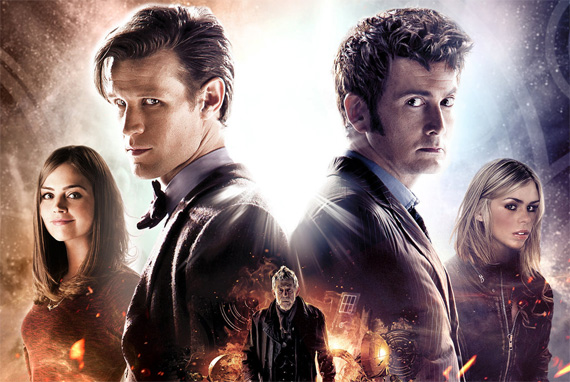
In this fiftieth anniversary celebration of Doctor Who, John Hurt is introduced as "the War Doctor", a bridge between Paul McGann's eighth incarnation and Christopher Eccleston's ninth. A sentient weapon sends him back in time to meet with Matt Smith and David Tennant's incarnations of the Doctor and solve a conundrum.
THE TIME OF THE DOCTOR (Christmas Special)

"The Time of The Doctor" sees Matt Smith's Doctor live out his final days protecting the community of Trenzalore from aliens trying to invade them. This surprisingly upbeat story also works as a meta commentary on what Matt Smith's Doctor meant to a lot of people. You'll find a lump in your throat as the Doctor finally takes off his bow tie and lets it fall to the ground.
SERIES 8
While it's one of the more weaker series of the Steven Moffat Doctor Who era, it's bolstered by a powerhouse performance by Peter Capaldi, filling in Matt Smith's shoes as a radically different rebel Timelord with unmatched style. There's some fantastic episodes in there, and a few horrid clunkers.
8x01 DEEP BREATH
Sets up the overarching plotline of the new series and introduces us to Capaldi's Thirteenth Doctor. It's probably one of the weakest series openers but it's got a spontaneously combusting dinosaur in the first few minutes, so there's that.
8x02 INTO THE DALEK
Well, the title pretty much explains the plot, doesn't it? And with cult British filmmaker Ben Wheatley at the helm, Into the Dalek is a trippy, thrilling experience.
8x04 LISTEN
Clara's private life and her attempts to romance her ex-soldier colleague Danny Pink are intruded upon by the Doctor, seemingly on a wild goose chase.
In my opinion the best episode of the series. Despite a controversial and divisive plot point, this story has Moffat's best writing since Impossible Astronaut two years ago. Go in blind and be prepared to be amazed and terrified.
8x08 MUMMY ON THE ORIENT EXPRESS
Jamie Mathieson makes his writing debut with this rollicking locked room thriller with a killer concept. Passengers on the Orient Express, a spaceship, are being killed by a mysterious Mummy-like creature that reveals itself to its victims sixty six minutes before their death. It is here that Peter Capaldi's Doctor really reveals himself and he is utterly different from the compassionate grandfatherly Eleventh. A solid, near-great Doctor Who adventure.
8x09 FLATLINE
Another Jamie Mathieson episode and a great one to boot. This is the Doctor-lite episode of the series, featuring Clara and her new friend graffiti artist Rigsy trying to get to the bottom of a mystery concerning disappearing people. Jenna Coleman, mostly devoid of the brilliant chemistry she shares with Capaldi, shines in this episode, learning what it really means to be a protector of the Universe like the Doctor. It also features the best new Monster of this series.
8x11 and 8x12 DARK WATER & DEATH IN HEAVEN
It is advisable to go into this two parter completely blind. There's more than a few delicious, horrifying twists that really make this two parter work. A certain returning Doctor Who monster has never been so creepy and a certain returning foe has never been so menacing.
SERIES 9
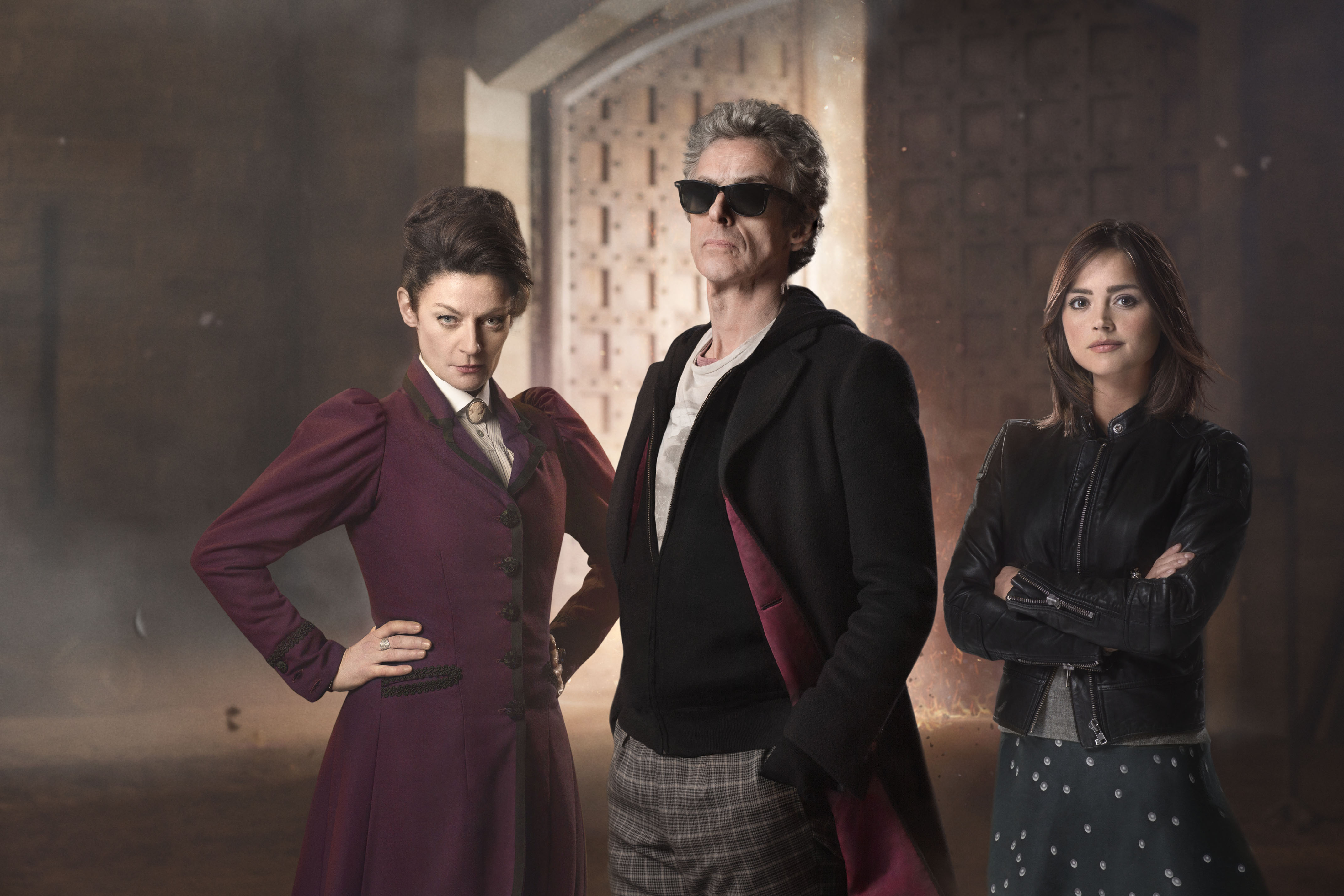
Moffat tried doing something novel with this series by making every story a two parter. This conceit mostly worked, producing a solid Doctor Who series and one bonafide classic. Interestingly, Moffat's final two series are political and relevant and quite dark, reflecting the sociocultural turbulence of the period they were made in.
9x01 and 9x02 THE MAGICIAN'S APPRENTICE & THE WITCH'S FAMILIAR
Moffat does what he does best : surprise and insult the viewer with equivalent dedication in this mostly good and encouraging series opener, a marked step above from last year's. A returning character and an immensely compelling dilemma makes this episode a must watch.
9x03 and 9x04 UNDER THE LAKE & BEFORE THE FLOOD
Being Human creator Toby Whithouse gives us a terrific two-parter fraught with terror that never loses its sense of adventure. Peter Capaldi and Jenna Coleman are a delight to watch in this timey-wimey story of ghosts and kings and a Monster - oh, what a lovely looking monster - with a mindblowing resolution. Solid, solid episode.
9x05 and 9x06 THE GIRL WHO DIED & THE WOMAN WHO LIVED
Featuring Maisie Williams as a viking girl, these two episodes are a little weak but you get some assuredly terrific work from Capaldi and Coleman and it sets up events that happen in the series finale.
9x07 and 9x08 THE ZYGON INVASION & THE ZYGON INVERSION
The Zygons return in this solid two parter that many critics hastily hoisted to "classic" status. While they're terrific episodes, I take umbrage with its hackneyed, naive, on-the-nose "Zygons as Muslims" political analogy and cliched storytelling. The climax, which many people love without question, also feels slightly problematic to me but its intentions are unquestionably good.
9x10, 9x11 and 9x12 FACE THE RAVEN & HEAVEN SENT & HELL BENT
A slightly middling set-up episode about an alien settlement in London leads to a fantastic Steven Moffat two-parter. I will not question Heaven Sent's status as a classic episode, what with its brilliant writing and flawless, heart-rending performance from Peter Capaldi. Of course, nothing could match the expectations set by Heaven Sent but Hell Bent is a pretty solid episode and gives a satisfying send-off to Jenna Coleman's tenure as companion.
THE HUSBANDS OF RIVER SONG (CHRISTMAS SPECIAL)
Except for the first one, Moffat's Doctor Who Christmas Specials have been quite mediocre. Over the course of his tenure as showrunner, it became plainly obvious that he has only a few tricks up his sleeve and between Doctor Who and Sherlock, he was quite spent. When a Moffat script works, it works. When it doesn't, your eyes never stop rolling in their sockets and your throats dries of continuous groaning. Fortunately, Husbands of River Song tends more towards the former than the latter. Moffat's attempts at whimsy have always been very weak but River Song and the Doctor have always had a charming chemistry and Alex Kingston and Capaldi are absolutely delightful together. Also of note : Matt Lucas as Nardole, who goes on to be one of the stronger companions of the Moffat era in the next series.
SERIES 10
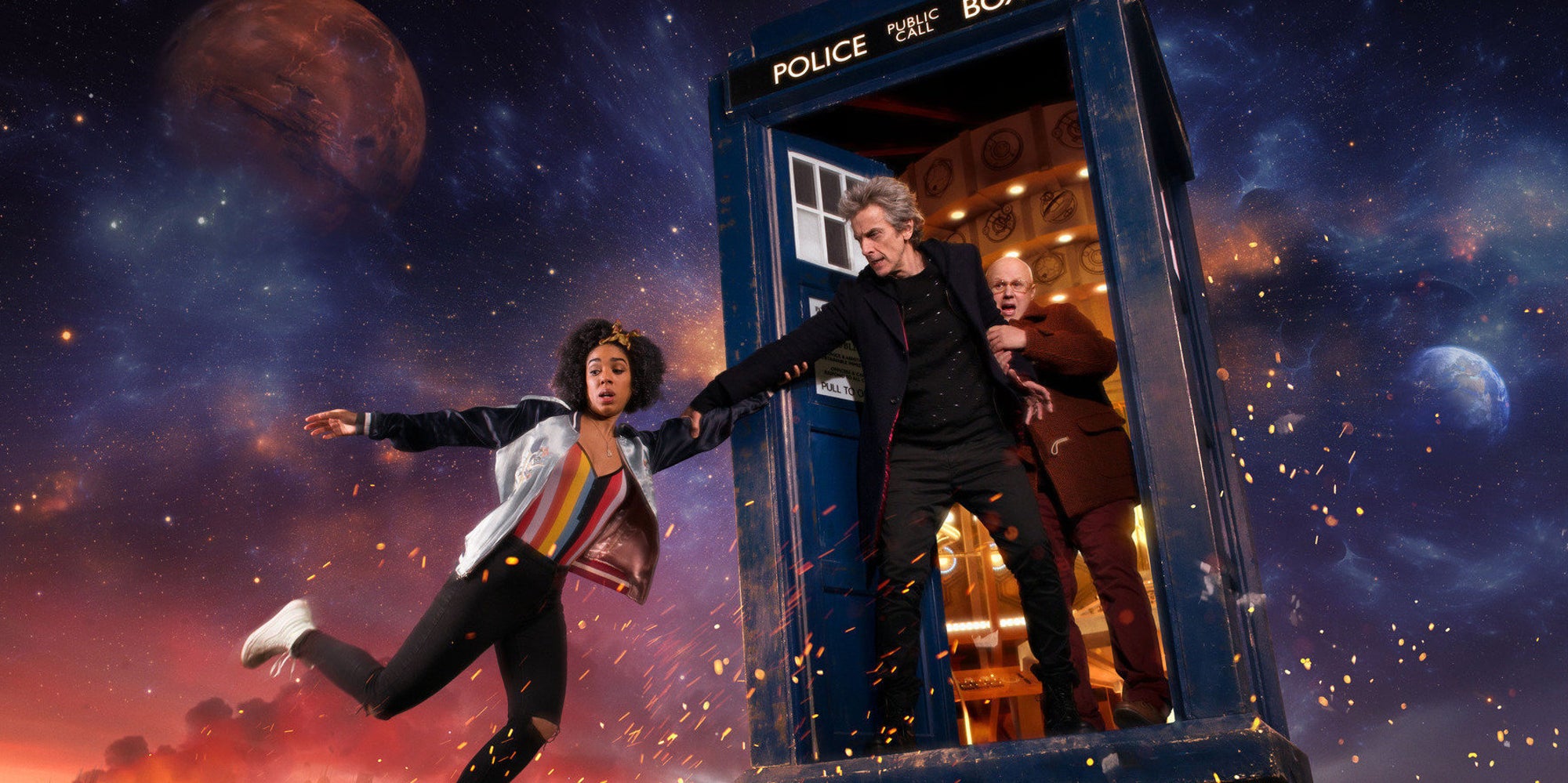
Peter Capaldi's final year as the Doctor and Steven Moffat's final year as showrunner came a year late and was a slight step down from the previous season. It was mostly solid, but featured some very clunky filmmaking that kept the consistently good writing from really working. Every episode feels bleak, and every episode features high, impossible stakes. Most importantly, every episode puts emphasis on solving problems through empathy and compromise, delivering a whole series of socially conscious and grim Doctor Who episodes. The BBC, however, conscious of the steadily depleting viewer count, decided to air teasers that gave away big surprises that severely dulled this series' potential.
10x01 PILOT
This middling series opener doesn't set high expectations for the rest of the series but has some interesting ideas and sets up the new companion, the extraordinary Pearl Mackie as Bill and the overarching plot. It's story about Bill's crush being consumed by sentient space fuel is bogged down by some particularly shoddy special effects work as the production team contends with what seems to be a shoestring budget for a show of Doctor Who's calibre. Essential for the series plot and the character introductions.
10x05 OXYGEN
Jamie Mathieson returns to deliver a terrific Gravity-esque thriller that doubles up as an anti-Capitalist fable. He relishes in putting Pearl Mackie's Bill and the Doctor in horrifying, hopeless situations in this fraught survival thriller with a space station full of Zombie astronauts.
10x06 & 10x07 & 10x08 EXTREMIS & PYRAMID AT THE END OF THE WORLD & LIE OF THE LAND
This three parter story started out with a bang and followed it up with a solid second part. The third part, despite an intriguing set-up, pretty much shits the bed with a hackneyed resolution that undoes the ruthless commentary that was promised in the earlier episodes.
10x09 THE EMPRESS OF MARS
This episode's Golden Age SciFi trappings, about a bunch of Victorian soldiers on Mars, on the verge of reawakening the formidable Ice Warrior Queen, hide a compelling story that comments on colonialism, war and sociocultural difference between races and nations. This is the first time Mark Gattiss's Doctor Who writing really clicked for me, one can sense the giddiness with which he attacks this HG Wellsian story and the characters are defined just enough to be more than one-note.
10x10 THE EATERS OF THE LIGHT
Classic Doctor Who writer Rona Munroe returns with this fable that explains the disappearance of Ninth Roman Legion. The stakes are surprisingly high and the conclusion is unexpectedly bitter-sweet, with a satisfying coda that is egregiously silly and heartwarmingly poignant in the way only Doctor Who could be.
10x11 and 10x12 WORLD ENOUGH AND TIME & THE DOCTOR FALLS
World Enough and Time has some really interesting ideas and creepy imagery that would have worked much better if the BBC didn't decide to spoil the identity of the villains and a surprise guest appearance. Its follow up, The Doctor Falls, is probably Steven Moffat's best (and final) series finale. This finale, refreshingly, is not the resultant of some overall series plot machinations but almost feels like a stand alone Doctor Who adventure that ends up being a pivotal event in the lives of our characters. The emotions and the character relationships are at the forefront, with Moffat gifting each of his characters with perfect endings. The plot is quite ordinary and uncluttered, the only moving pieces being the clockworks inside the characters' souls and a timed threat that feels positively insurmountable. By the time the finale's deus ex machina ending rolls out, you're willing to forgive it for the emotional roller coaster it took you through, and also because of a ridiculously awesome cliff-hanger leading into the upcoming Christmas special.
Watch the ones in TARDIS-BLUE and you'll catch up with the story in time for Broadchurch writer Chris Chibnall's takeover as showrunner and Steven Moffat's final story, "The Doctors", airing Christmas 2017.
The last time I updated this page, I remarked that off previews and a bunch of leaked scripts and episodes, series 8 seemed to be Doctor Who getting back in form after two lacklustre series and that Peter Capaldi's Doctor, purported to be more grim and irritable than Matt Smith's or Tennant's might just be the breath of fresh air that the show needs.
I wasn't wrong, really. Capaldi was a fantastic, throwback Doctor and while he didn't get the best stories, he really left a mark on the character. In fact, he has usurped Matt Smith as my favourite nuWho Doctor. I will remember when the Doctor was him and I will miss him dearly. As I write this, the official Doctor Who twitter account has just announced that the next Doctor will be revealed right after Wimbeldon's on Sunday. I don't think I'll edit in that information until after the next series has aired. I want to remember this wonderful moment of uncertainty and excitement. There's also a level of apprehension. Chris Chibnall is best known for Broadchurch, a good crime drama but nowhere near Sherlock or Jekyll, the shows Moffat worked on before getting the coveted Doctor Who job. In addition to that, Moffat also boasted a resume of working on the best Doctor Who stories of the new series, while Chibnall's efforts have been mediocre to horrible.
Well, let's hope they can fill the massive, giant-sized shoes Capaldi and Moffat are leaving behind. Sunday will tell.
If you like what you see, there's no dearth of Doctor Who material. You can literally consume Doctor Who related stuff until the day you die. There's the pre-2005 series, then there's the Big Finish Audio drama, and a gajillion books, a few videogames and most of them are pretty darn good.

![[Donna03.jpg]](https://blogger.googleusercontent.com/img/b/R29vZ2xl/AVvXsEiAV3e4_roV1o09lMfH5t8YBxwrDFe1qQHXckX3TjO9kbUIikcD9qym3Ko-8DJMuQw09xhpnJKnFgSQhJbzYuhhF36ho6onGa65g3OAv0FwFyoC9rK6r2YC928mK07fnvMlA_cS9mc_xRew/s400/Donna03.jpg)




 A lot of twitter reactions say that Iron Man overshadows every other character
in the movie. Those reactions are absolutely wrong and possibly written by
RDJtards. Nobody overshadows anybody. They stand together in the movie. Side by
side. As a team. As. They. Should. And I absolutely applaud Whedon for that. I
had some fears that Iron Man would serve as the leader-type given his current
popularity, but that isn’t the case. Captain America LEADS the Avengers, and
Whedon gives us good reason why he SHOULD lead them and why everyone else is
listening. But since Whedon has to appease Robert Downey Jr’s ginormous
ever-expanding ego, he does something really cool with Iron Man, but handles it
so that it doesn’t overshadow other characters. To get these guys together and to do such
justice to them… Whedon accomplishes an absolutely impossible feat and I
congratulate him for that.
A lot of twitter reactions say that Iron Man overshadows every other character
in the movie. Those reactions are absolutely wrong and possibly written by
RDJtards. Nobody overshadows anybody. They stand together in the movie. Side by
side. As a team. As. They. Should. And I absolutely applaud Whedon for that. I
had some fears that Iron Man would serve as the leader-type given his current
popularity, but that isn’t the case. Captain America LEADS the Avengers, and
Whedon gives us good reason why he SHOULD lead them and why everyone else is
listening. But since Whedon has to appease Robert Downey Jr’s ginormous
ever-expanding ego, he does something really cool with Iron Man, but handles it
so that it doesn’t overshadow other characters. To get these guys together and to do such
justice to them… Whedon accomplishes an absolutely impossible feat and I
congratulate him for that. What I didn’t love in the movie is Nick Fury. Whedon writes him as a
manipulative General who’ll do anything in his power to save the world and it
isn’t his fault that Fury doesn’t shine. It’s Samuel L Jackson’s. A person’s
badassocity can only carry a character till so much, and I feel SLJ isn’t fit
to play Fury. Sure, Fury’s shrewd and manipulative, but he’s also noble. And
that’s where SLJ fails. He just didn’t shine like the rest of the cast, and it
wasn’t because he was underwritten or anything… SLJ just couldn’t pull it off.
And I’m saying that as a huge Samuel L Jackson fan who keeps on using his
dialogues in real life situations, mind you.
What I didn’t love in the movie is Nick Fury. Whedon writes him as a
manipulative General who’ll do anything in his power to save the world and it
isn’t his fault that Fury doesn’t shine. It’s Samuel L Jackson’s. A person’s
badassocity can only carry a character till so much, and I feel SLJ isn’t fit
to play Fury. Sure, Fury’s shrewd and manipulative, but he’s also noble. And
that’s where SLJ fails. He just didn’t shine like the rest of the cast, and it
wasn’t because he was underwritten or anything… SLJ just couldn’t pull it off.
And I’m saying that as a huge Samuel L Jackson fan who keeps on using his
dialogues in real life situations, mind you.